Bird Bath Fountains: Moving Water for Birds & Pollinators

Image by Rowan Sage via Adobe Firefly — a shallow, moving water feature can turn a garden corner into a small habitat stop for birds, bees, butterflies, and other pollinators.
Backyard Habitat & Pollinator Water
Bird Bath Fountains: Why Moving Water Helps Birds, Hummingbirds & Pollinators
A bird bath fountain is more than a pretty garden accent. The right shallow, clean, moving water source can support birds that never visit seed feeders, give hummingbirds a misty bathing spot, and create safer sipping stations for bees, butterflies, and other small wildlife.
Why a bird bath fountain belongs in a resilient garden
When gardeners think about wildlife habitat, they often start with flowers, seed heads, shrubs, and nesting cover. Those pieces matter, but water is the missing habitat layer in many yards. Cornell Lab’s All About Birds notes that adding water can attract birds that do not eat seed and may never use a feeder, because birds need a dependable supply of fresh, clean water for drinking and bathing.
That makes bird bath fountains especially useful in gardens designed around eco-restoration, sustainable living, and mindful outdoor spaces. A fountain gives sound, motion, cooling, and hydration in one small footprint.
It also helps widen the meaning of a “pollinator garden.” Nectar plants feed adults. Host plants feed caterpillars. Leaf litter shelters overwintering insects. Water completes the system by helping birds, bees, butterflies, wasps, dragonflies, and other small creatures survive hot spells and dry stretches.
Moving water is easier for birds to find
Birds are tuned into movement and sound. A silent, still bowl can help if it is clean and shallow, but moving water is usually more noticeable. Cornell recommends dripping water as a way to make a birdbath more attractive, and Wild Birds Unlimited makes the same practical point: many backyard birds find moving water hard to resist.
That does not mean your fountain needs to look dramatic. A gentle bubbler, slow trickle, small solar pump, water wiggler, or fountain head that keeps water circulating can be enough. For wildlife, the goal is not a showpiece geyser. It is a shallow, dependable, easy-to-clean water station where animals can land safely and leave safely.
Rowan’s Resilience Tip
If your fountain spray is emptying the bath, switch to a bubbler or the lowest nozzle. Birds and bees need a calm edge more than they need a tall splash.
What birds actually need from a bird bath
The best bird bath fountains mimic the shallow edges of puddles and slow streams. Cornell’s guidance is practical: water should be shallow, with a gentle slope, stones or branches for standing, and a maximum depth around 2 inches in the center. Deep, slippery, hard-to-clean basins may look decorative, but they are not always the best bird habitat.
Place matters too. During hot months, shade keeps water cooler and slows algae. Nearby branches give birds a place to preen after bathing. At the same time, avoid setting the bath directly beside dense shrubbery where cats or other predators can hide. A good placement offers cover nearby, visibility around the bath, and easy access for cleaning.
Why fountains can help with mosquitoes
Standing water can become mosquito habitat if it is neglected. The fix is simple but important: change and refresh small water features often. Cornell recommends changing bird bath water every day or two in above-freezing weather, partly because dirty feathers and droppings can make the bath unsanitary and partly because mosquito eggs can develop in neglected water.
The Xerces Society also recommends dumping and refilling bird baths every few days and using motion for larger permanent features, since mosquitoes reproduce in still water. A fountain, waterfall, or small pump can keep the surface moving. If the pump intake is open, add protective screening so aquatic insects such as dragonfly and damselfly nymphs are not pulled in.
Hummingbirds use fountains differently than songbirds
Hummingbirds get much of their water from nectar and small insects, but they are still drawn to running water, misters, sprinklers, waterfalls, and fountains. Pollinator Partnership notes that hummingbirds are attracted to running water and that wetland edges and ponds also support the insect populations hummingbirds eat.
That matters because hummingbirds are not living on sugar alone. They visit nectar sources, but they also eat tiny insects and spiders for protein. A garden with native nectar plants, safe water, and insect-friendly habitat does more for hummingbirds than a feeder by itself.

Learn how hummingbirds use nectar, insects, feeders, and water
Build a stronger habitat plan by pairing moving water with the right flowers, feeder care, and migration support.
Read the Hummingbirds GuidePollinators need safe landing places
Birds can wade. Bees cannot. That is the biggest difference between designing water for birds and designing water for pollinators. Xerces recommends shallow water with stones so bees and wasps can perch without slipping, and a muddy or sandy spot for butterflies that seek minerals and salts from damp soil.
Anoka County Master Gardeners make the same point for a wider group of pollinators: bees need shallow dishes with pebbles or floating platforms, butterflies favor damp sand or soil, dragonflies need freshwater habitats, and bats drink on the wing from open or slow-moving water. One water feature can help multiple species if it includes levels, landing surfaces, and clean maintenance.
For birds
Use shallow water, rough surfaces, nearby perches, and daily or every-other-day cleaning during warm weather.
For bees
Add stones, corks, twigs, or sloped edges so small insects can drink without falling into deep water.
For butterflies
Keep a damp sand or mud area nearby so butterflies can collect moisture, salts, and minerals.
Bird bath fountain options to compare
The right fountain depends on your basin size, sunlight, maintenance style, and whether you want battery backup. Solar floating fountains are affordable and easy to test, but direct-sun models may stop under clouds or shade. A separate-panel system with a battery can be more flexible for gardens where the bath sits in part shade.
Affiliate note: prices and promotions below were noted from the user-supplied product details on May 15, 2026 and can change at any time. Always check the current listing before purchasing.

POPOSOAP 6.5W Solar Fountain Pump with Battery Backup
This option is useful if you want a stronger solar panel, a rechargeable backup battery for cloudy moments, multiple spray styles, and dry-run protection. It is a good fit for gardeners who want more flexibility than a direct-sun-only floating pump.
Observed May 15, 2026: $29.99 with a possible checkout promotion. Amazon displayed it as an “Overall Pick.”
View on Amazon
Mademax Solar Bird Bath Fountain
This floating direct-sun fountain is simple, affordable, and comes with nozzle options and stabilizing brackets to help keep spray from emptying the bath. It works best in clean water and strong direct sunlight.
Observed May 15, 2026: $16.79, marked down from $21.79, with possible coupon availability.
View on Amazon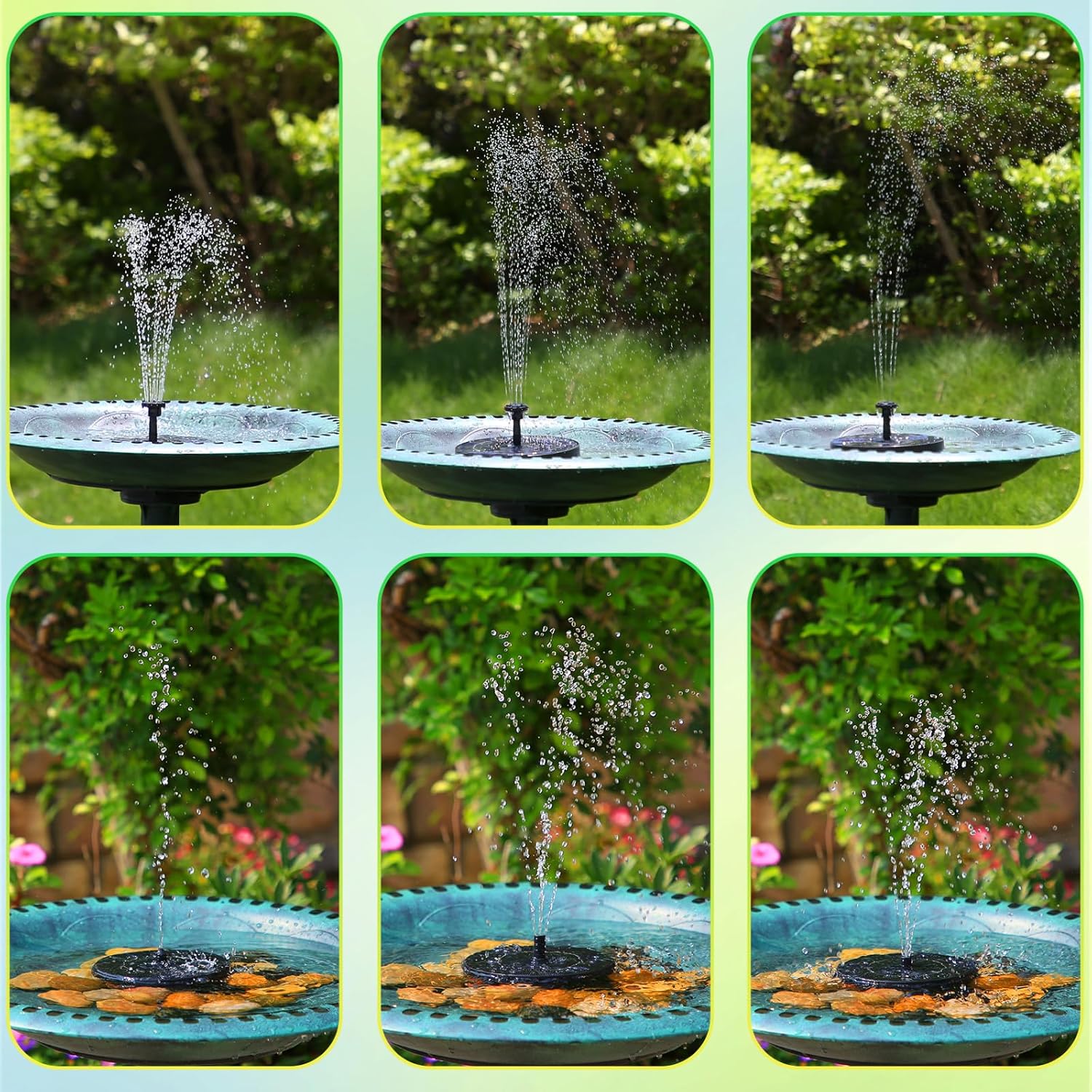
AMZtime Solar Water Fountain
This low-cost solar fountain can be a simple way to test whether moving water attracts more activity to your bath. It includes multiple nozzle styles and fixed brackets, but like many basic solar pumps, it depends on direct sun.
Observed May 15, 2026: $9.99 and listed as a best seller in tabletop fountains.
View on Amazon
Solar Fountain Water Pump
This solar pump starts in sunlight, includes several spray heads, and can work for bird baths, small ponds, garden decor, and simple water circulation projects. It is a practical pick if you are already shopping irrigation or garden supplies.
Observed May 15, 2026: $14.97.
View at Drip Depot
Browse solar fountain sizes and options on Poposoap
Use coupon code ResilientRoots for 10% off floating fountains and many other items. This is a good place to compare battery-backup, floating, and DIY water feature options.
Shop Poposoap Solar FountainsHow to set up a bird bath fountain safely
Start with the basin before you choose the pump. If the bath is narrow, a tall spray head may look fun for a few minutes and then empty the water onto the ground. In small bowls, use a bubbler, no nozzle, or the lowest spray option. In larger basins, test the pattern on a calm day and then again when it is breezy.
Next, add landing surfaces. A few clean stones, a textured shallow ledge, a branch, or a sloping side can help birds and pollinators approach safely. For bees and wasps, avoid a smooth, deep bowl with nowhere to stand. For butterflies, set a shallow tray with damp sand nearby instead of expecting them to use the open water like birds do.
Simple setup checklist
- Use a shallow basin with gentle slopes or stone perches.
- Keep the deepest water around 2 inches for birds.
- Choose a bubbling or low spray setting if the basin is small.
- Place the bath where birds have visibility and nearby perching branches.
- Refresh water every day or two in warm weather.
- Scrub buildup before it becomes slippery or foul.
Plant around the fountain, not just inside it
A bird bath fountain becomes more effective when it sits inside a living habitat. Add native flowers for nectar, shrubs for cover, seed-bearing plants for fall and winter, and layered vegetation for different bird sizes. UC ANR notes that native plants are especially useful because they support caterpillars and other insects birds need, while also offering nesting and resting spaces.
For hummingbirds, pair the water feature with tubular nectar flowers such as cardinal flower, bee balm, columbine, penstemon, salvias suited to your region, and native flowering shrubs or vines where appropriate. For other birds, add berries, seed heads, grasses, brushy cover, and plants that host insects.
Want instant structure around a new bird bath fountain? Live plants can help you build shade, nectar, and shelter faster than seed alone.
Container water gardens and patio habitat
You do not need a large yard to support birds and pollinators. Pollinator Partnership says even a small garden or window box can be made attractive to hummingbirds when it includes food, water, shelter, and space. The same idea works for balconies and patios: one shallow water feature, a few nectar plants, a container shrub, and pesticide-free maintenance can create a small but meaningful habitat patch.
If you are building the water feature into a container garden, keep soil health in mind. Avoid letting potting mix wash into the bird bath, and choose containers with good drainage so the area around the bath does not become sour or muddy unless you are intentionally making a small butterfly puddling tray.

Building a patio habitat in containers?
Use healthy, well-draining container soil around your water feature so nectar plants, herbs, and small shrubs can support wildlife without creating soggy roots.
Shop Rosy SoilWhat not to do with a bird bath fountain
Do not add antifreeze. Cornell is clear that antifreeze is poisonous to animals, including birds. Do not add glycerin either, because it can saturate feathers and increase hypothermia risk. Avoid harsh chemical treatments, and do not rely on pesticide sprays to solve mosquito concerns. Xerces notes that pesticide sprays can harm beneficial insects while failing to address the larger mosquito life cycle.
Also avoid placing the bath where outdoor cats can ambush wet birds. Bathing birds are vulnerable. Keep cats indoors when possible, and place the water source with enough open visibility that birds can see danger before they land.
A bird bath fountain can also make your garden more watchable
There is a reason Audubon has covered bird bath photography: a simple water feature can bring wildlife close enough to observe from home. Moving water, morning light, nearby vegetation, and a darker background can create beautiful moments without leaving your own yard.
This is where the habitat and mindful-space benefits overlap. A fountain gives birds and pollinators a resource, but it also gives people a reason to slow down and notice who shares the garden. For families, it can become a Junior Naturalists observation station: Which birds drink? Which bees land on stones? Do butterflies visit damp sand? Does activity change in morning, afternoon, or after a hot day?

Grow your own healthy sprouts right in your kitchen
Use code RESILIENTROOTSREALM at checkout for a discount on your order, specifically for Resilient Roots readers.
Shop The Sprouting CompanyThe bottom line
A bird bath fountain is one of the simplest habitat upgrades a gardener can make. It does not replace native plants, shelter, insects, or clean gardening practices, but it completes the picture. Keep it shallow. Keep it clean. Add stones and safe landing points. Use gentle movement. Surround it with living plants. Then watch the garden become more alive.
FAQ: bird bath fountains
Are bird bath fountains better than still bird baths?
They can be, especially when the movement is gentle. Moving water is easier for birds to notice and can help discourage mosquitoes, but the bath still needs shallow edges, safe landing places, and frequent cleaning.
How deep should a bird bath be?
A good wildlife-friendly bath is shallow: about 1 inch at the edges and no more than about 2 inches in the middle for most backyard birds.
Do hummingbirds use bird bath fountains?
Yes, hummingbirds are attracted to running water such as fountains, misters, sprinklers, waterfalls, and bird baths with gentle movement, although they also need flowers, insects, and safe cover.
How often should I clean or refresh the water?
In warm weather, refresh the water every day or two. Scrub the bath when it becomes dirty or slippery so it remains safe for birds and does not become mosquito habitat.
How can I make a bird bath safe for bees?
Add shallow areas and landing surfaces such as stones, corks, twigs, or a sloped edge. Bees cannot swim, so they need a dry place to stand while drinking.
Sources & further reading
- Cornell Lab All About Birds — Attract Birds With Birdbaths
- Xerces Society — Make a Simple Water Source to Support Pollinators
- Pollinator Partnership — Hummingbird Learning Center
- University of California Agriculture and Natural Resources — Living with Birds
- UC ANR — Bees Need Water
- Anoka County Master Gardeners — Creating Water Spaces for Pollinators
- Wild Birds Unlimited — Provide Water guidance

About the author
Rowan Sage writes for Resilient Roots about resilient gardening, eco-restoration, wildlife habitat, soil health, and practical ways to make nature-friendly spaces work in real homes. Contact: resilientrootsrowan@gmail.com.
Build a more alive garden, one small habitat layer at a time
Join Resilient Roots for practical guides on wildlife gardening, small-space growing, eco-restoration, and resilient home landscapes.


Comments
Post a Comment