How to Grow Potatoes in Grow Bags: Planting, Hilling & Tips
Urban Innovation & Edible Gardening
How to Grow Potatoes in Grow Bags: Planting, Hilling & Tips
Potatoes are one of the easiest high-reward crops to grow in small spaces. With the right seed potato prep, a loose soil blend, and a simple hilling routine, grow bags can turn patios, balconies, and tucked-away flower beds into clean, productive potato-growing spots.

Photo by Rowan Sage — grow bags make it possible to tuck potatoes into places that would never fit a traditional row, from patios to ornamental beds to little corners of urban yards.
Why grow bags work so well for potatoes
Potatoes naturally lend themselves to containers because the harvest happens below the soil line. That means the plant does not need a wide raised bed or a large in-ground row to be productive. What it needs most is enough depth for tubers to form, a loose growing medium that does not compact around them, and a system that makes hilling easy. Grow bags solve all three problems at once.
They also solve one of the biggest emotional barriers new gardeners run into: the fear that potatoes require a huge, traditional garden setup. They do not. A few fabric bags in a sunny location can give you a surprisingly satisfying crop, and the cleanup at harvest is far easier than digging through heavy native soil.

Photo by Rowan Sage — potato grow bags are especially useful in balconies, patios, and small-space gardens where you want something productive without building a whole bed.
No, it is not automatically too late
One of the most common reasons people skip potatoes is the assumption that they missed the moment. But potato timing is not one fixed calendar date for everyone. It changes by zone, frost risk, soil warmth, and whether you are growing an earlier or later-maturing type. In many places, gardeners still have time to plant when they switch to a more appropriate maturity class or use containers in a warmer microclimate.
That is one reason grow bags are so helpful: they warm more quickly than large in-ground spaces, they can be moved if a late chill shows up, and they make it easier to experiment with timing without dedicating a full bed.
Start with certified seed potatoes
The easiest way to protect a potato crop before it even begins is to start with certified seed potatoes. These are grown and sold for planting, not just eating, and they are a better choice when you want stronger emergence and lower disease risk. Grocery potatoes may sprout, but they are not selected with planting performance in mind, and some have been treated or stored in ways that make them less ideal for a reliable container crop.
If you are buying for grow bags, think first about maturity class. Earlier potatoes can be especially useful when you have a shorter season or when you are trying to squeeze potatoes into a warmer region without pushing them deep into summer heat. Midseason and later types can still work beautifully, but they need more time and steadier growing conditions.

Browse seed potato varieties for different gardens and harvest windows
If you want more options for choosing a variety that fits your space and season, this seed potato search page is a simple place to compare different types before planting.
Shop Seed Potatoes on Seeds NowHow to prep seed potatoes before planting
Good potato prep starts before the bag ever gets filled. If your seed potatoes are still dormant, set them in a bright location that stays cool and out of direct, scorching heat. A sunny window can work if it is not excessively hot, but the main goal is short, sturdy sprouts rather than pale, stretched growth. This early sprouting process helps seed pieces get moving once planted.
Once the eyes have clearly developed, larger seed potatoes can be cut into smaller pieces. Each section should carry at least one or two healthy eyes. After cutting, let the surfaces dry and callus for a short period before planting. That curing step helps the seed piece handle planting better than a freshly cut, wet surface dropped immediately into damp mix.
Simple seed potato prep
- Place seed potatoes in a bright, cool indoor spot.
- Wait for short, sturdy eyes to emerge.
- Cut large potatoes into pieces with at least one or two good eyes.
- Let cut surfaces dry and callus before planting.
- Plant once the bag and soil blend are ready.
The best potting blend for potato grow bags
Potatoes want a growing medium that holds moisture without turning dense and sticky. A bag packed with heavy garden soil is much more likely to compact, stay unevenly wet, and make harvest harder than it needs to be. In most cases, a loose potting blend or raised-bed style mix is a better fit. You want enough structure to anchor the plant, enough organic matter to hold moisture, and enough air space that new tubers are not trying to swell in a brick.
If your usual mixes tend to dry too fast, adding a stable, well-made container soil can help smooth out the watering cycle. Just avoid creating a muddy or overloaded mix. Potatoes need steadiness, not swamp conditions.

Upgrade your soil with Rosy Soil
Looking for a cleaner, container-friendly soil option for potted crops and patio growing? Rosy Soil offers living soil powered by biochar for gardeners who want a more earth-friendly potting setup.
Shop Rosy SoilStep by step: how to plant potatoes in a grow bag
The easiest bag setup starts low. Roll the bag sides down so you are not trying to fill the entire thing at once. Add roughly 4 to 6 inches of your potting blend to the bottom. Set the seed potatoes on that layer with space between them so each plant has room to build. Cover them lightly with more mix and water thoroughly.
That shallow start matters because potatoes are not planted at the top and then left alone. They are built upward as the season progresses. A half-filled bag at planting time makes that much easier than a tall, fully packed container from day one.
Planting depth
Start shallow with only a few inches of mix below and above the seed pieces. This makes early warming and later hilling easier.
Bag setup
Roll the bag down at first. Unroll it gradually as stems grow and you add more mix.
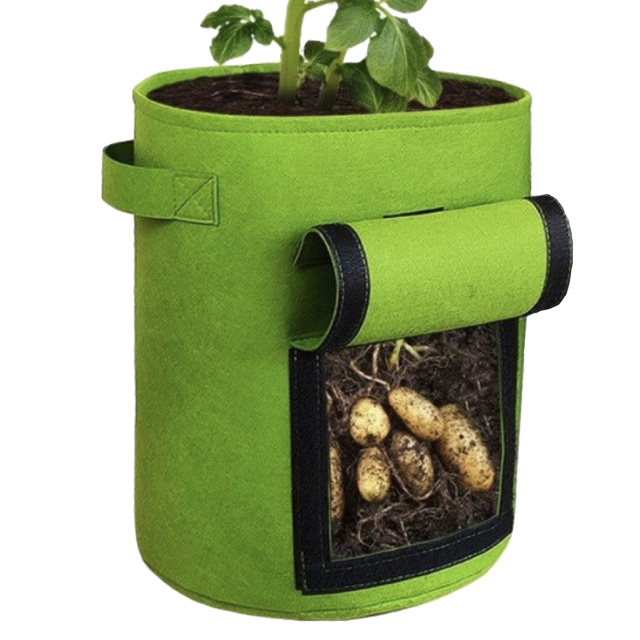
Shop grow bags on Drip Depot
Grow bags come in different colors, sizes, materials, and styles, including woven and non-woven options, some with harvest flaps for potatoes and others designed for crops like strawberries and tomatoes.
Shop Grow Bags on Drip DepotHow hilling works in a grow bag
Hilling is what makes the system work. As the green stems rise, add more potting blend around the lower portion of the plant while leaving the upper foliage exposed. Then unroll the grow bag a bit higher and repeat. Each round of hilling protects forming tubers from light and gives the plant more buried stem length to work with.
In practice, this means you are slowly building the container upward instead of filling it all at once. Do not bury the whole plant. Cover only the lower section and let the top leaves stay above the surface. Continue until the bag is close to full or the plant has reached its mature working height.
Advanced tip: staged layering for more yield
Some gardeners experiment with staged planting inside taller bags by adding a second round of seed potatoes when they hill the first time. The idea is to use shorter-harvest varieties higher in the bag while earlier planted pieces continue growing below. This can extend use of vertical space, but it is not a guaranteed shortcut. It can also increase competition for water, nutrients, and root room if the bag is too small or the season is too short.
If you want to try it, keep the bag size generous, choose varieties carefully, and treat it as an experiment rather than a standard rule. For most beginners, one well-managed layer of seed potatoes per bag is still the easiest route to a satisfying harvest.
Sun, water, and feeding
Potatoes in grow bags want full sun and steady moisture. Because fabric bags breathe and drain quickly, they can dry faster than in-ground rows, especially on patios and balconies. Letting them swing from bone-dry to soaked over and over can slow tuber development and reduce the quality of the final harvest. Water deeply enough to wet the whole root zone, but do not keep the bag waterlogged.
They also appreciate moderate feeding. A rich starting mix may carry them for a while, but a light, balanced feeding program through active growth can help if the foliage begins to look hungry. Keep nitrogen reasonable. Too much leafy push without enough balance can mean more top growth than usable potatoes.
Potato planting windows by USDA zone
This quick table is designed to make the “is it too late?” question easier to answer. It is not a rigid law. It is a flexible planning guide that helps you match planting windows to local conditions and variety maturity.
| USDA Zone | General Planting Window | Best Maturity Focus | Helpful Notes |
|---|---|---|---|
| Zones 3–4 | After soil can be worked in spring; often later spring | Early to midseason | Shorter seasons usually favor quicker varieties and fast early growth. |
| Zones 5–6 | Early spring into mid-spring, often before the last frost date has fully passed | Early, midseason, or selected late | Grow bags can warm a bit faster than garden beds and help stretch the window. |
| Zones 7–8 | Late winter through early spring | Early to midseason | Earlier planting often helps potatoes size up before stronger heat arrives. |
| Zones 9–10 | Cool season planting, often fall through winter depending on region | Early types especially useful | Heat can shut potatoes down, so timing around the cooler part of the year matters most. |
| Mild coastal / protected urban sites | Use local frost patterns and microclimate rather than zone alone | Flexible | Containers and patios can behave differently than open garden ground. |
Earlier potatoes usually mature fastest, midseason types offer a broader middle window, and later types need the most uninterrupted growing time.
Common mistakes that make grow-bag potatoes disappointing
Using dense garden soil: heavy soil compacts in bags and makes both tuber formation and harvest harder.
Skipping hilling: potatoes need that gradual build-up of soil to protect developing tubers.
Letting bags dry out repeatedly: uneven moisture can lead to stress, lower yields, and rougher tuber quality.
Starting too deep in a full bag: filling the whole container at planting wastes the main advantage of a grow bag system.
Using unknown store potatoes: certified seed potatoes are usually the safer, cleaner planting choice.
Why this is such a good project to do with kids
Grow bags make potatoes especially fun for children because the process is visible in stages. They can watch the seed potatoes sprout indoors, help place them into the bag, measure stem growth, help hill the container upward, and finally dig through the finished mix like a treasure hunt at harvest. It is one of the easiest edible crops to turn into a real-time observation project without needing a big school-garden setup.
That step-by-step unfolding also makes patience easier to teach. Potatoes do not look dramatic on day one, but every stage gives kids something concrete to notice: sprouts, stems, leaves, hilling, flowering in some cases, and then the surprise of what formed below the surface.
The bottom line
Potatoes in grow bags are not a gimmick. They are one of the most practical small-space food crops a gardener can grow. Start with certified seed potatoes, prep them properly, plant shallowly in a loose mix, and hill upward as the season progresses. That simple rhythm is what makes the whole system work.
Most of all, do not assume the opportunity has already passed. When you match the variety, timing, and bag setup to your climate, potatoes are often far more flexible than people think.
FAQ: potato grow bags
Is it too late to start potatoes in grow bags?
Not always. The right window depends on your zone, your local frost pattern, and the maturity class of the variety you choose. Earlier potatoes often keep the window open longer than gardeners expect.
Can I use grocery store potatoes?
Certified seed potatoes are the better choice because they are intended for planting and are a safer starting point for disease management and stronger emergence.
How much soil do potatoes need in a grow bag?
Start with a shallow base of about 4 to 6 inches of mix and add more gradually as you hill the plants upward. The final depth will be much greater than the starting depth.
Do grow bags need a harvest flap?
No. Harvest flaps can be convenient, but regular fabric bags still work very well. You can tip the bag out at harvest and sort through the mix easily.
Sources & further reading
- University of Minnesota Extension — Growing potatoes in home gardens
- Iowa State Extension — Growing potatoes in the home garden
- RHS — Grow your own potatoes
This article is intended for educational purposes and is designed to help gardeners match potato timing and variety choice to their own local growing conditions.

About the author
Rowan Sage writes for Resilient Roots about resilient gardening, food-growing systems, soil health, and practical ways to make productive gardens fit real homes and real schedules. Contact: resilientrootsrowan@gmail.com.
Grow stronger roots with Resilient Roots
Want more practical guides for edible landscaping, container growing, and resilient home harvests? Join the free list and keep a running library of garden projects, plant guides, and low-stress growing ideas at your fingertips.


Comments
Post a Comment